A pest control service Centreville homeowners call at 10pm — after droppings show up under the kitchen sink or ants trail across the counter — should start with an inspection, not a spray can. Every visit begins with naming the pest, finding how it got in, and writing the price down before any product is applied.
No forms — call now for a fast, no-pressure quote.
📞 Call (571) 741-0060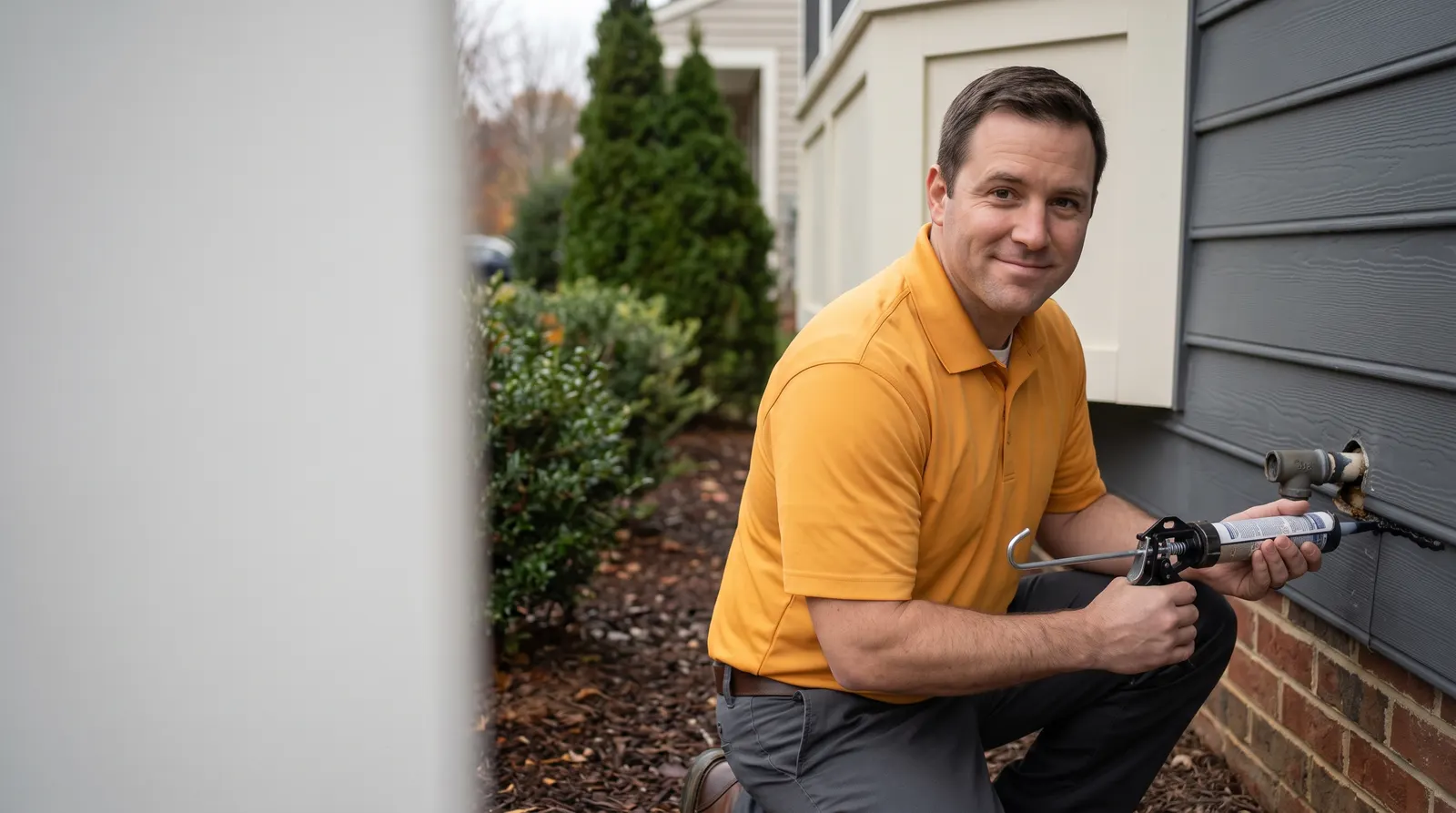
Pest control service in Centreville is an inspection-led service that identifies the pest species, locates the entry points and harborage on the structure, treats the active infestation, and seals the gaps that let the pest in.
Every service reflects the same meticulous attention to detail — whether it's a single job or a larger pest control service project across Centreville.
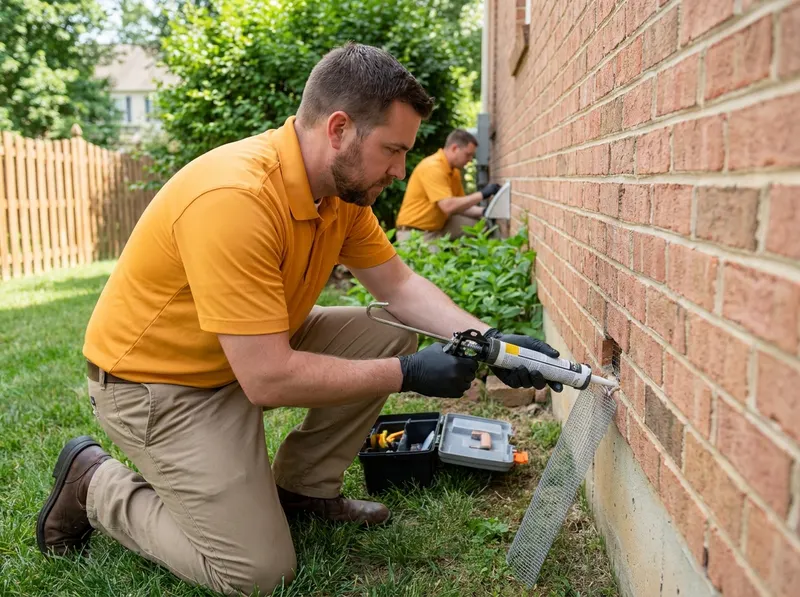
House mice and the occasional field mouse enter Centreville homes through gaps most homeowners never look at: worn garage door sweeps, unscreened dryer vents, the gap where the AC line set passes the siding, and crawlspace access doors that no longer seat flush. Treatment pairs trapping and monitoring inside with physical sealing outside, because a mouse that finds the same hole in November will use it again next November. The fall push starts as nights cool through September and October — that is the ideal window for exclusion work.
View details →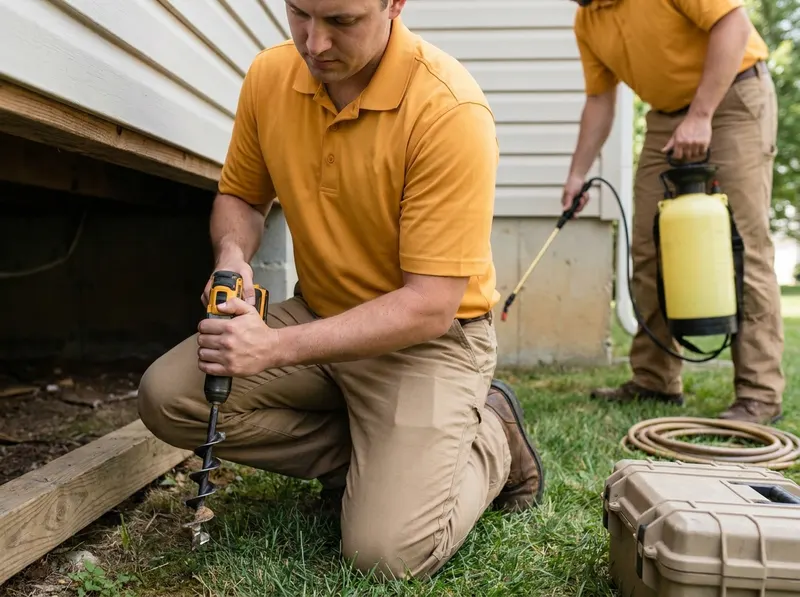
Eastern subterranean termites are the species that matters in Fairfax County, and they announce themselves two ways: mud tubes on foundation walls and basement piers, or a swarm of winged reproductives at a sunny window in spring. Inspection covers the sill plate, crawlspace framing, deck ledger boards and any wood-to-soil contact around the slab. Treatment addresses the soil and foundation perimeter rather than interior surfaces, because the colony lives underground.
View details →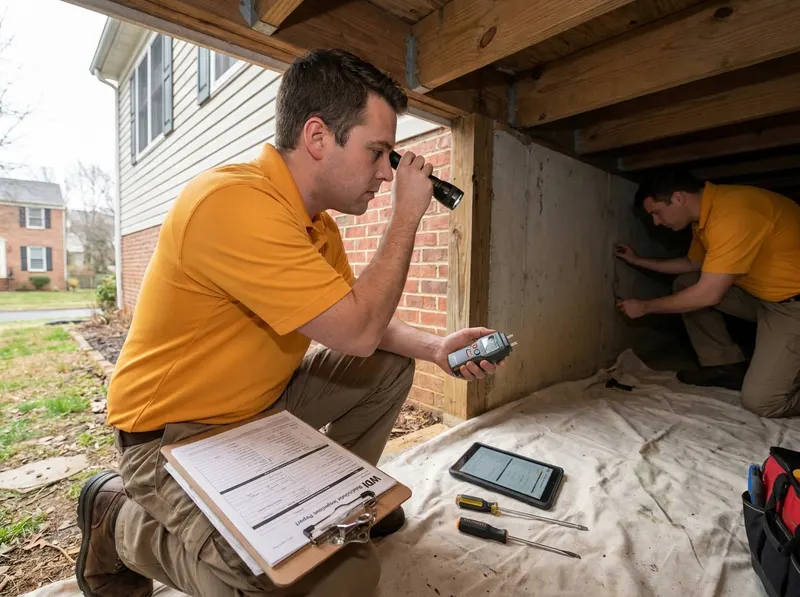
Wood-destroying insect inspections are the ones lenders and buyers ask for during a home sale, and they cluster with the spring Fairfax County closing season. The inspection documents evidence of termites, carpenter ants, powderpost beetles and old-versus-active damage, with a written report you can hand to the agent. Book one to two weeks ahead in April and May, when settlement dates stack up across Centre Ridge, Compton Village and Newgate.
View details →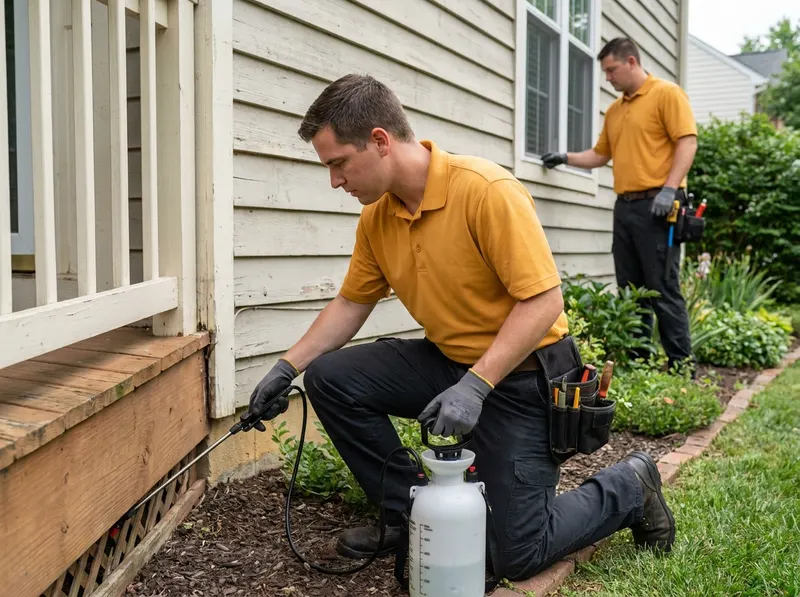
Identifying the ant decides the treatment. Odorous house ants trail to moisture and sugar and are usually nesting outside in mulch or under slab edges; carpenter ants excavate damp wood and often signal a leak at a window frame, a deck ledger or a bath wall. Both peak May through August as summer humidity drives them indoors along townhome slabs near the Lee Highway corridor. Work includes finding the moisture source, not just wiping the trail.
View details →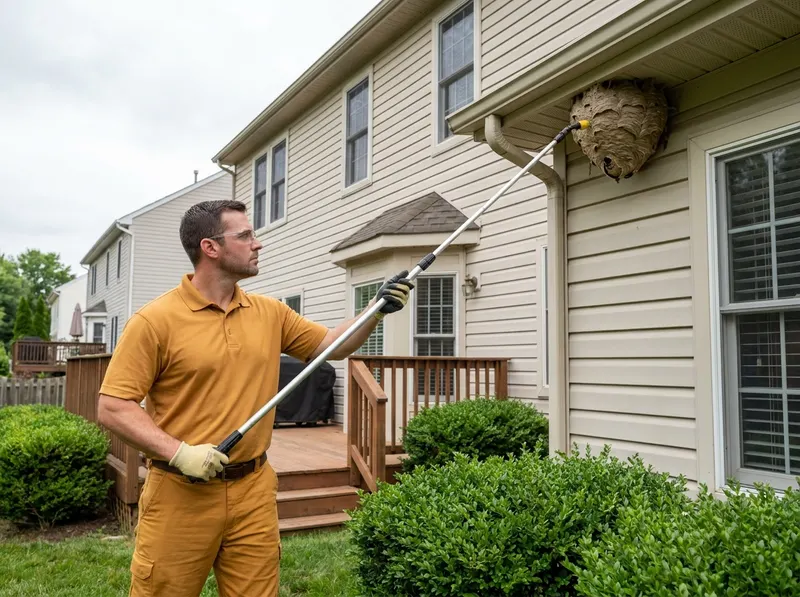
Nests over front doors, inside soffit returns, under deck rails and in ground voids get treated and removed, with the void or gap addressed so the same sheltered spot is not reoccupied next season. Bald-faced hornet and yellowjacket activity gets noticeably more defensive in late summer, which is why calls climb in August and September. If the nest is above a doorway or a child's play area, say so when you call so the visit is scheduled accordingly.
View details →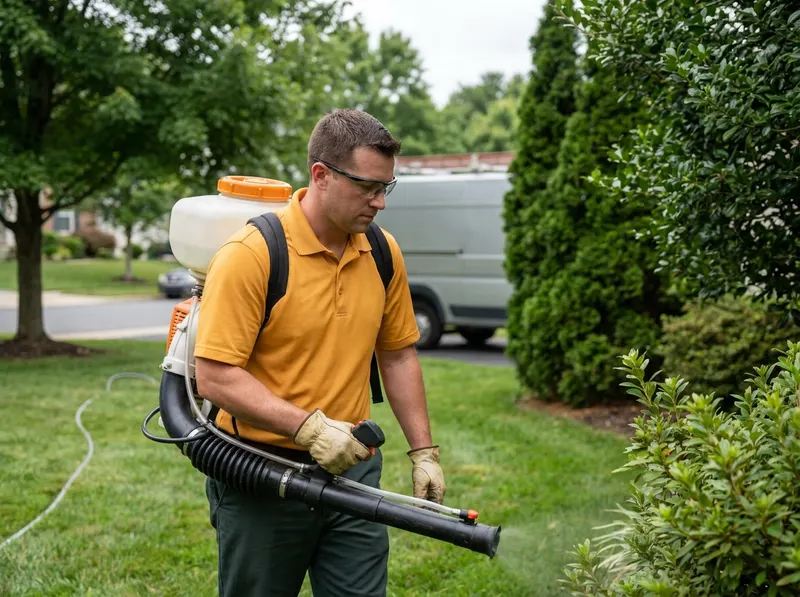
Mosquito and tick pressure in Centreville is a habitat problem before it is a spray problem. Shaded, low-lying yards backing to Cub Run Stream Valley Park or the Bull Run Regional Park corridor hold moisture, leaf litter and standing water in gutters, tarps, tire swings and plant saucers. Programs typically begin in April and run into September or October, treating harborage — ivy beds, shrub undersides, tree lines — and correcting the breeding sites we find.
View details →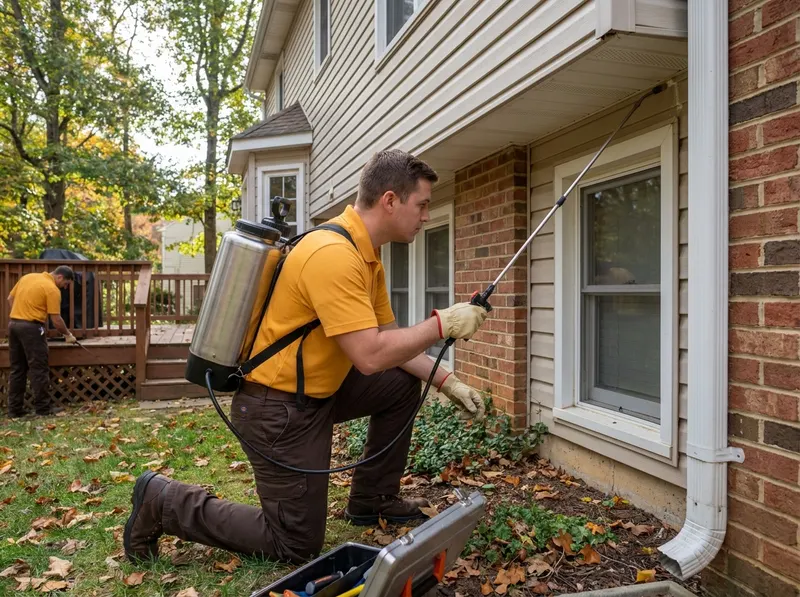
Brown marmorated stink bugs, boxelder bugs and lady beetles gather on sunny south- and west-facing walls from September through November, then filter inside through window weep holes, attic gable vents and gaps behind shutters. Effective work is a late-August or September exterior perimeter treatment combined with sealing those specific openings. Once they are inside a wall void in December, the honest answer is that removal is limited — timing is everything with this one.
View details →
German cockroaches move between units in townhomes and stacked condos through shared plumbing chases and utility penetrations, so treatment covers the harborage under sinks, behind dishwashers and inside motor housings, plus the shared-wall entries. Pantry pests — Indian meal moths, flour and drugstore beetles — get traced back to the specific bag or box that came home from the store. Both require identification first; the wrong bait on the wrong species just relocates the problem.
View details →Pest control service in Centreville is an inspection-led service that identifies the pest species, locates the entry points and harborage on the structure, treats the active infestation, and seals the gaps that let the pest in.
You get a firm, itemized quote for your pest control service before any work begins — no surprises, no pressure.
Careful prep, tidy work, and a full cleanup when we are done. We treat your home and belongings like our own.
The same trusted, background-checked team from the first call to the final check.
If you have one visible problem — a wasp nest over the front door, a single mouse in the pantry, ants on the kitchen counter — choose a one-time targeted treatment with exclusion. You get a diagnosis, treatment of that species, and the entry points sealed, typically $250 to $475, and you are done. If you keep seeing the same pest return every four to six weeks, choose a recurring quarterly program instead: the value there is not more chemical, it is scheduled re-inspection of the exterior perimeter, the crawlspace hatch, and the areas where activity showed up last time. The trade-off is straightforward — one-time work costs less today but only addresses what is active now, while quarterly costs more across the year and catches the next species before it establishes. If your concern is termites specifically, a WDI inspection is the right first step rather than any general spray, because subterranean termites are treated at the soil and foundation, not on the baseboards. If you are selling a house in Virginia Run or Little Rocky Run and the buyer's lender demands documentation, choose the WDI inspection with a written report; if you simply want to know whether the mud tubes on your basement wall are active, a standard inspection answers that for less. And if you have a dog, a toddler, or a vegetable bed along the foundation, say so at the start — placement changes, bait stations get tamper-resistant housings, and re-entry timing gets explained before anything is applied rather than after.
Every project gets a firm, written price after a free on-site visit. Ranges below for orientation.
Tell us about your pest control service job and we'll send a clear, written quote — usually the same day. Or just call and talk to a real Centreville pro.
(571) 741-0060
Centreville housing stock creates predictable entry points: the mid-1980s through 1990s subdivisions around Little Rocky Run, Newgate and London Towne are heavy on slab-on-grade and shallow-crawlspace townhomes with shared walls, aging garage door sweeps and brick-veneer weep holes — all of which read as open doors to a house mouse or an overwintering stink bug. Homes backing to Cub Run Stream Valley Park, Bull Run Regional Park and E.C. Lawrence Park sit against continuous wooded stream corridors, which keeps deer tick and mosquito pressure higher along those rear property lines than in the interior of a subdivision. Older wood construction near Mount Gilead and the Centreville Historic District, and the mature tree canopy through Virginia Run and Country Club Manor, means more wood-to-soil contact and more shade-held moisture — the two conditions Eastern subterranean termites and carpenter ants both look for.
Free estimates for Centreville & the surrounding area.
 Avenza Pest Control Service